The Scroll Behind You Don't Know Yahuah If You Don't Obey Him: Knowing Proven by Keeping
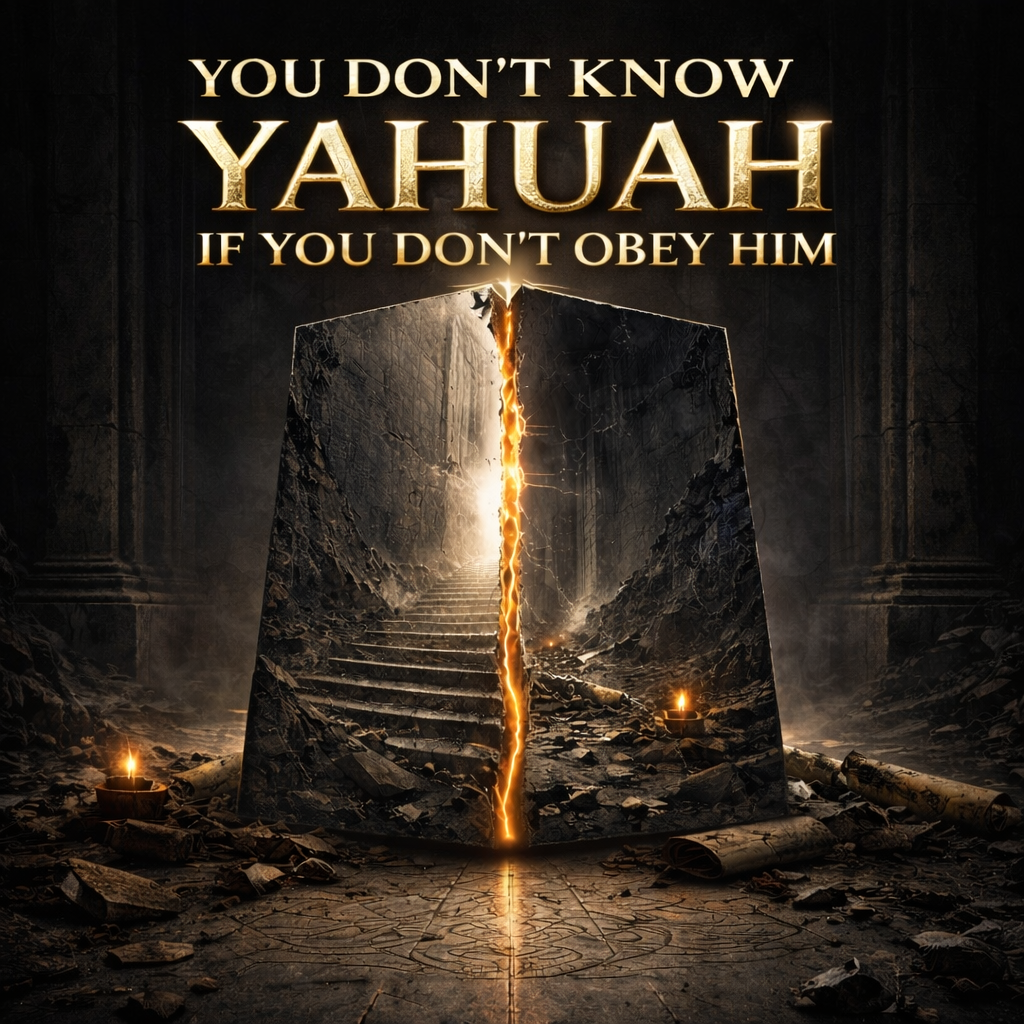
You Don't Know Yahuah If You Don't Obey Him is a confrontational song, and its whole case is in the title. It answers a simple question with a hard standard: how do you actually know you know Yahuah? Not by what you say, the song insists, but by whether you keep His commands. Claiming is not knowing.
The scroll it stands on is Yahukhanan Ri'shon (1 John) 2:3-4. The test given there is direct: keeping His commands is how a person knows they truly know Him, and claiming to know Him while ignoring His commands makes the claim a lie. Knowing and keeping are welded together. The supporting passages hammer the same nail. Mattithyahu (Matthew) 7:21-23 warns that not everyone who says the right words enters the reign, only the one who does the will of the Father, and that some who did impressive things will still be told they were never known. Yaʿaqob (James) 2:17-18 says trust without works is dead and asks to be shown trust apart from what it produces. Mattithyahu (Matthew) 7:16-20 says a tree is known by its fruit, so the life reveals the root. And Dabarim (Deuteronomy) 11:1 sets the pattern from the start, to love Yahuah and keep His charge and His commands always. The witness runs straight from the older scroll to the later one: love is kept, not merely felt.
The heart of the song is that Amunah (firmness, trust) and obedience cannot be separated, and that Mitswah (command) is how love for Yahuah takes a real shape. Knowing Yahuah is a Bariyth (binding covenant) relationship, and a covenant has terms. The song confronts empty profession, ignored appointed days, and the fear of man that keeps people quiet, and it calls for Teshubah (turning back) into actual obedience. It points to Yahusha, who kept the Torah (instruction) fully and returns to judge by the fruit of a life rather than the volume of its claims. The mood is unafraid, because the message is meant to unsettle comfort and move the hearer to keep what they say they believe. This is Tsedek (rightness) as a way of walking, not a way of talking.
Listen and go deeper on the You Don't Know Yahuah If You Don't Obey Him page and its streaming links, and read the knowing-by-keeping passage in the scroll of Yahukhanan Ri'shon in the Tanakh library, then read the fruit test in Mattithyahu and the dead-faith charge in Yaʿaqob. From here move to Obedience To Yahuah Is Love, Fear Yahuah or Fall, He Don't Bow, and Scrolls In My Veins, which all carry knowing into doing.
You can say you know Yahuah, but the scroll says the keeping is the proof. Obedience is not the price of knowing Him; it is the evidence you already do. That is why this song refuses to let words stand alone.
Answer
Q: What does You Don't Know Yahuah If You Don't Obey Him mean?
A: The song is built on Yahukhanan Ri'shon (1 John) 2:3-4, which says we know that we know Him by this, that we keep His commands, and that anyone who says they know Him but does not keep His commands is a liar. The song teaches that truly knowing Yahuah is proven by obedience, not by words or professions alone. It rebukes empty claims and points to Yahusha, who kept the instruction fully.
Continue with ZoreaYahu
Hear the music: Music
Watch: Videos
Study the restoration: Study
Wear the witness: Shop the merch