The Scroll Behind Yahuah Said It's Settled: A Word Fixed in the Heavens
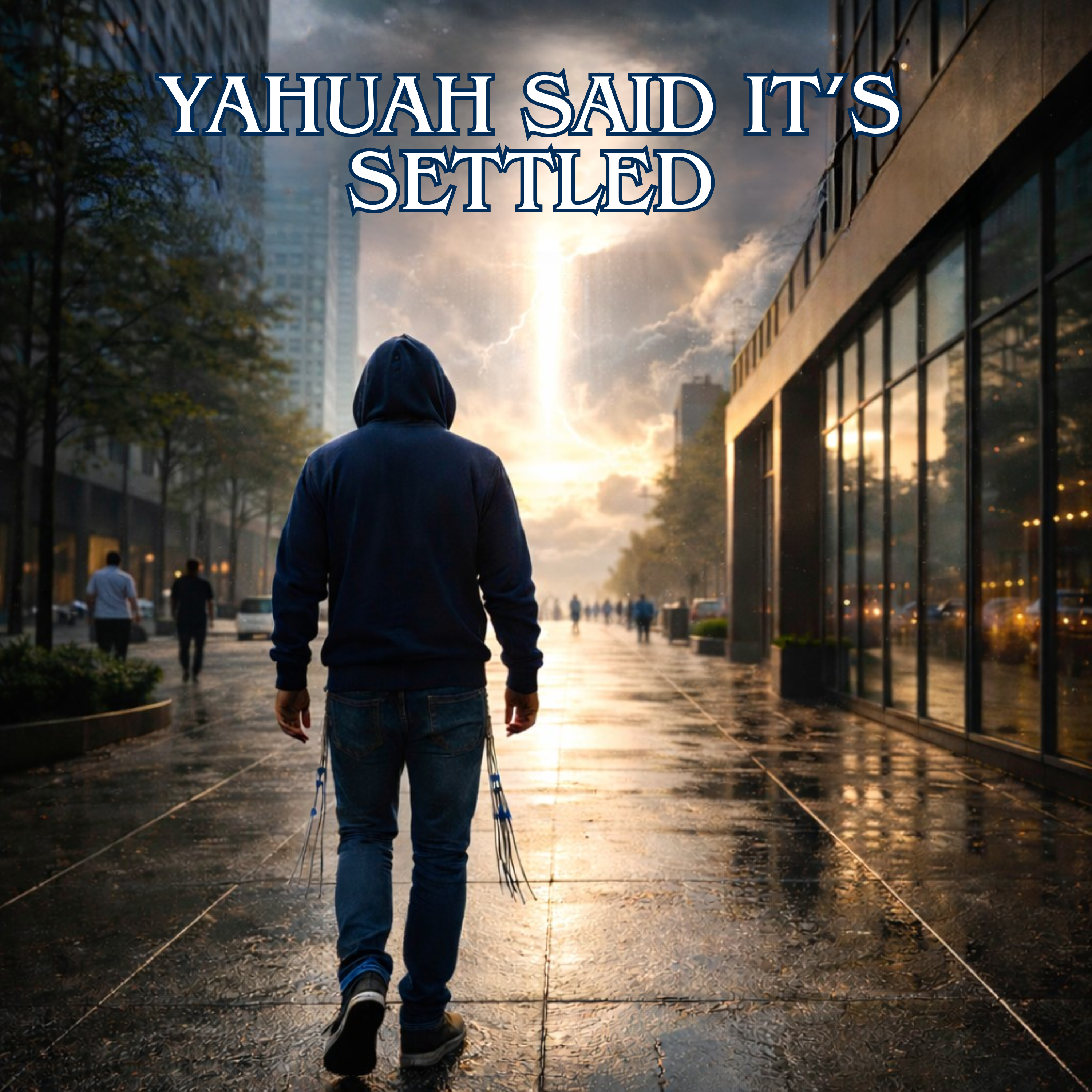
Yahuah Said It's Settled is a song with the tone of a verdict already handed down. It is not arguing toward a conclusion, it is announcing one, because the scroll it rests on speaks of the word of Yahuah as something fixed before the debate ever started.
Its primary passage is Tahilliym (Psalms) 119:89-96. The section opens by declaring that the word of Yahuah is settled forever in the heavens, and then widens outward: His Amunah (firmness, trust) reaches to every generation, the earth stands because He established it, and all things serve according to His right rulings. It ends by saying that the singer has seen a limit to all perfection, but the Mitswah (command) of Yahuah is exceedingly broad, without such a limit. The plain meaning is that the word is not a document under human management. It is anchored above, older and steadier than the people who receive it, and it outlasts everything that looks permanent. Dabarim (Deuteronomy) 4:2 and 12:32 fence it on both sides, forbidding any addition or subtraction. Yashaʿyahu (Isaiah) 40:8 repeats that the word stands forever while grass withers. Mal'aki (Malachi) 3:6 grounds it in the unchanging character of Yahuah, and Mattithyahu (Matthew) 5:17-19 records Yahusha saying He did not come to dismantle the Torah but to fill it full, and that not the smallest stroke would pass away.
The heart of the song is the word settled. Because the word is fixed in the heavens rather than in human custody, no council, no era, and no majority vote can vacate it. This is where the song draws its confidence. A person does not need to defend a settled thing, only to stand on it. The Torah (instruction) is broad and enduring, as Tahilliym 119:96 says, and the response the song calls for is Teshubah (turning back) to the standard that was never actually repealed. Mattithyahu 5:17-19 is placed here deliberately, showing continuity rather than replacement, so the settledness is not a claim of one testament against another but a single unbroken word. Amunah rests easy on something that cannot be edited.
If this song reaches you, read the long scroll of Tahilliym in the Tanakh library, and let the section from 119:89 sit in full so the picture of a word settled in the heavens becomes clear. Then visit the Yahuah Said It's Settled page and its streaming links to hear that certainty carried in sound. The related songs hold the same ground. Yahuah Never Changed names the unchanging one behind the unchanging word, Obedience To Yahuah Is Love shows the settled word lived out, and Yahuah Breaks The Lies clears away the stories that tried to overturn it.
A thing settled in the heavens is not waiting on a human ruling to confirm it. The debate people keep reopening was closed before it began. Yahuah has spoken, and what He settled stays settled.
Answer
Q: What does Yahuah Said It's Settled teach?
A: It teaches that the word and Torah of Yahuah are already established and are not open to human editing, abandonment, or expiration. It stands on Tahilliym 119:89-96, where the word of Yahuah is described as settled in the heavens and enduring through every generation. The song treats that as a closed matter: Yahuah has spoken, and the case is settled.
Continue with ZoreaYahu
Hear the music: Music
Watch: Videos
Study the restoration: Study
Wear the witness: Shop the merch