The Scroll Behind The Sword of Yahuah: When Victory Is Made Too Small to Steal
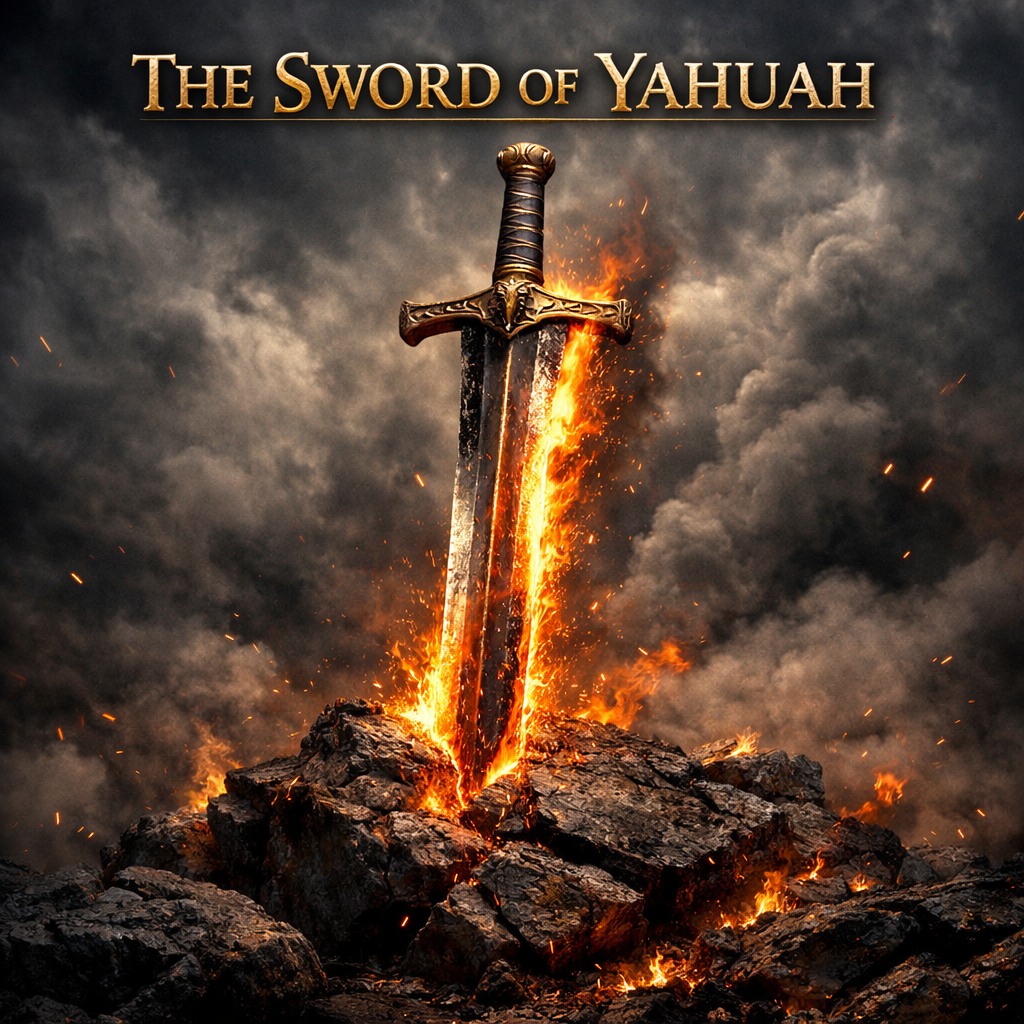
The Sword of Yahuah is a battle song, but its subject is not really the fight. Its subject is who gets the credit when the fight is won, and the answer is set up long before the first blow.
The song stands on Shaphatim (Judges) 7:18-22, the night Gidʿun attacks Midyan. The strange part of that account is what happens before the battle. Yahuah tells Gidʿun the force is too large, not too small, and cuts it from thousands down to three hundred. The reason is stated plainly in the passage: so that Yashar'al cannot turn and boast that its own hand saved it. Then the reduced band surrounds the camp at night with horns and torches and raises a cry that binds two swords together, the sword of Yahuah and the sword of Gidʿun. The enemy panics in the dark and turns on itself. The victory is real, and it is impossible to explain by the size of the army. That is the whole design. The supporting passages set the frame around it. Shamuth (Exodus) 15:3 names Yahuah as the one who fights. Dabarim (Deuteronomy) 20:1-4 tells Yashar'al not to fear a larger force because Yahuah goes with them into battle. Yashaʿyahu (Isaiah) 34:5-6 and Tahilliym (Psalms) 7:12-13 speak of His sword and drawn weapons in the language of Mishpat (right ruling), judgment carried out, not random violence.
Put together, these passages carry a single edge the song is built to swing. The sword of Yahuah is not a picture of human aggression made holy. It is the assertion that the decisive strength in any real conflict belongs to Him, and that He often arranges the situation so this cannot be denied. Gidʿun's three hundred are the point, not an accident. When the odds are stripped down on purpose, a win can only be read one way. The song carries that reading. It is loud and forward, but its loudness is aimed at Yahuah's authority, not at the fighter's ego. The cry in the passage puts His sword first for a reason.
There is also Amunah (firmness, trust) buried in the fear. Gidʿun was not fearless. The account has him listening at the enemy camp to steady his own nerve before he moves. The song does not pretend the fighter feels no dread. It says the fighter moves anyway, because the sword that matters is not the one in his hand. That is the honest shape of courage in the Scroll: not the absence of fear, but action grounded in whose battle it actually is.
To go deeper, sit with The Sword of Yahuah page and its streaming links, then open the scroll of Shaphatim in the Tanakh library and read chapter 7 whole, watching how carefully the army is reduced before the fight. The related songs Ride With Yahuah, We Move In The Name Of Yahuah, Yahuah's Song of the Sea, and Fear Yahuah or Fall stand alongside this one on the same theme of His authority in conflict.
The three hundred were not a handicap. They were the message. When the outcome is stripped of every human explanation, the only name left to say over the victory is Yahuah, and that was the plan before the horns ever sounded.
Answer
Q: Where does the Scroll use the battle cry connected with the sword of Yahuah?
A: The clearest place is Shaphatim (Judges) 7, in the account of Gidʿun against Midyan. The cry raised there names the sword of Yahuah alongside the sword of Gidʿun. It comes after Yahuah deliberately shrinks the army to three hundred men, so that when the enemy breaks, no one can claim the win belonged to human numbers.
Continue with ZoreaYahu
Hear the music: Music
Watch: Videos
Study the restoration: Study
Wear the witness: Shop the merch