The Scroll Behind He Don't Bow: Standing When the Furnace Is Lit
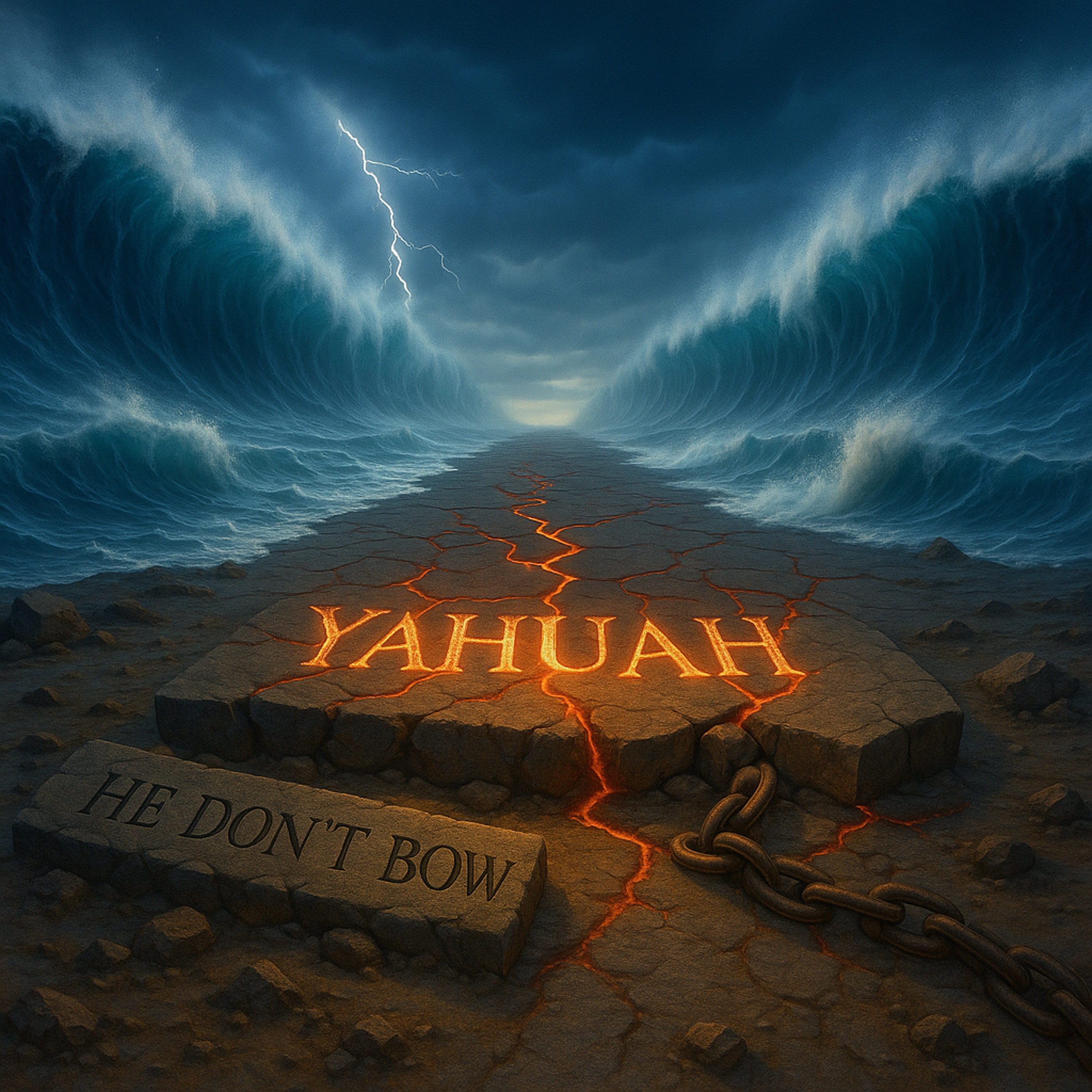
He Don't Bow is a song about the moment when obedience costs everything and a person pays it anyway. It takes the posture of the three men in Babel and makes it a way of standing, not a single scene. The refusal in the title is not stubbornness. It is loyalty that has already counted the price.
The scroll it stands on is Daniy'al (Daniel) 3:1-30. The plain account is stark: a massive image, a royal command, music as the signal to fall down, and a furnace waiting for anyone who stays upright. Three men stayed upright. Their answer to the king carried no bargaining and no hedging. They did not claim to know they would be spared. They said Yahuah could deliver them, and that their decision held either way. The supporting passages explain why. Shamuth (Exodus) 20:3-6 is the command itself, that no carved image is to be served and that worship belongs to Yahuah alone. Daniy'al (Daniel) 6:10-23 shows the same spine later in the same book, when a man keeps praying toward his window knowing the lions wait. Yahusha (Joshua) 24:14-15 sets the choice out plainly, a call to decide whom you will serve and to mean it.
The heart of the song is that faithfulness cannot be proven in comfort. It is only tested where refusing is dangerous. The three men embody a Mitswah (command) that has moved from paper into the body, so that bowing becomes physically impossible for them even when standing means death. This is where the song presses on the listener. Every generation builds its own image and plays its own music, and the pressure to fall in line rarely arrives as a furnace. It arrives as a job, a reputation, a family peace, a fear of being the only one left standing. The song refuses all of it. It holds Amunah (firmness, trust) that does not depend on the outcome, the same trust the men spoke aloud: even if He does not deliver us, we still will not bow. That clause is the whole song. It severs obedience from reward and roots it in who Yahuah is. And the scroll answers the trust with presence, a fourth figure walking with them in the flames, which is the promise underneath every hard stand, that Yahuah meets His people inside the fire and not only on the far side of it.
To go deeper, visit the He Don't Bow page and its streaming links, then read the scroll of Daniy'al in the Tanakh library, chapters 3 and 6 together, so the pattern is unmistakable. If this song strengthens you, follow it with Still I Stand In Yahuah, We Move In The Name Of Yahuah, and The Sword of Yahuah, which carry the same courage into endurance and battle.
The furnace did not win, but the men decided before they ever knew that. He Don't Bow teaches that the stand is made in advance, in the quiet, long before the music plays. What you settle now is what will still be standing when the heat comes.
Answer
Q: Who refused to bow to the image in Daniy'al 3?
A: In Daniy'al (Daniel) 3:1-30, three men in Babel, Shadrak, Meyshak, and Abed-Nego, refused to bow to the golden image the king set up, even under threat of the furnace. They told the king plainly that Yahuah was able to deliver them, and that even if He did not, they still would not serve his image. Yahuah met them inside the fire and brought them out untouched.
Continue with ZoreaYahu
Hear the music: Music
Watch: Videos
Study the restoration: Study
Wear the witness: Shop the merch